Water play
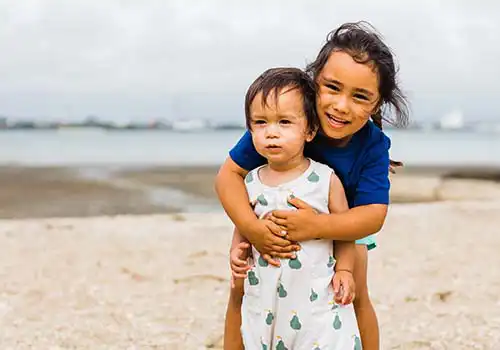
Water play promotes language acquisition, fine and gross-motor development, communication skills and eye-hand coordination. It builds trust in others and nurtures curiosity. Whānau can support pēpi to use their senses to explore.
Why do it?
Playing with water is a fun activity that can be enjoyed inside or outside, providing tamariki with multiple opportunities for open-ended play and skill development.
- It can promote language, cognitive and sensory activities.
- Water play can be calming, exciting or require focus and concentration.
- It also supports hand–eye coordination.
- Water play doesn’t have to be only at bath time.
- Skills are developed by pouring, measuring, filling, emptying, splashing, swirling and floating.
How to do it
You don’t need a large quantity of water for a toddler to enjoy themselves — an ice cream container full of water with a small yoghurt container to dip and pour is enough. Water play can be:
- washing dishes
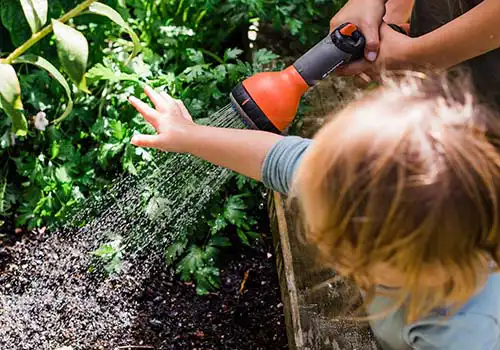
- watering the garden
- blowing bubbles
- walking in the rain
- splashing in puddles
- bathing dolls
- paddling in the waves
- having a tea party
- racing waka
- washing the car
- having a bath.
Further tips for water play fun
- For toddlers, gumboots and puddles can provide lots of fun for stomping and splashing in. Dropping stones in and watching and listening to the results is great too.
- On warmer days, put a baby bath or large container outside and fill it with lukewarm water. Add plastic cups for dipping and pouring, sponges to squeeze and things that float.
- Use buckets, basins, babies’ baths, sieves, hoses and plastic containers. Have objects that float or sink.
Safety tips
- Water play requires constant supervision at this age and stage.
- An old towel on the floor will help to avoid anyone slipping in puddles.
Using more te reo Māori
| Te reo Māori | English |
|---|---|
| Ringi | Pour |
| Wai | Water |
| Ngongo wai | Water hose |
| Ua | Rain |
| Awa | River |
| Hōpua | Pool |
| Kapua | Cloud |
| Tōhihi | Puddle |
| Pāpaku | Low |
| Tātari | Strainer, colander |
| Horoi | Wash |
| Kaukau | Swim |
| Tāre | Doll |
| Pākete | Bucket |
| Hoe | Paddle |
| Waka | Boat |
| Utuhia | Fill a container |
| Whakapiakotia | To empty out |
| Pōhutu | Splash |
| Patapata | Drip |
| Pūrewa, teretere | To float, be buoyant |
| Takawiri | Cork |
| Totohu | Sink |
| Kia mataara | To be alert, vigilant |
| Kia tūpato | Be careful |
| Kamupūtu | Gumboot |
| Mirumiru | Bubbles |
| Pōrutu | Splashing |
| He mahana tēnei wai | This water is warm |
| He makariri tēnei wai | This water is cold |
| Tangohia tō poraka | Take off your jersey |
| Kei te mākū koe? | Are you wet? |
| Homai te tāora | Pass me the towel |
| He ipu aihikirīmi | Ice cream container |
| Tāora | Towel |
| Uwhiuwhi | Sprinkle |
| Māku | Wet |
| Kapu | Cup |
| Kōpūpūtai | Sponge |
| Kōhatu | Stone |
| Rākau | Stick |
| Tere | Fast |
| Pārekareka | Enjoyable, fun |