Webinar: Pāpātanga – supporting fathers
This Tākai Kōrero webinar from 14 October 2026 features a panel of pāpā and is facilitated by Noel Woods from Mana Mokopuna. The panel share stories and tips, and explore how to tautoko (support) fathers as they grow as parents.
Watch the webinar recording
: Tākai Kōrero: Pāpātanga – supporting fathers
Tākai Kōrero: Pāpātanga – supporting fathers (transcript)
Noel Woods:
Tuia te rangi e tū iho nei. Tuia te papa e takoto nei. Tuia ngā kōrero, tuia ngā wānanga. Kia mau, kia ita. Kia kurupounamu te rongo mō te oranga ō ngā mokopuna. Whiti, whano nau mai te toki. Haumi e, hui e, tāiki e!
Heoi anō tuatahi rā ki a mihi ki a rātou, ngā mate o te motu. Ngā marae aituātia kua whetūrangitia, whetūrangitia! Whiti mai te rā ki runga i a tātou, te kanohi ora. Nau mai, piki mai, kake mai ki tēnei pāpāhotanga, tēnei wāhanga hou o Tākai Kōrero.
Ko Noel Woods ahau nō Ngāti Porou, Ngā Ruahine-rangi, Taranaki Tūturu, Te Āti Awa ki Te Whanganui-a-Tara.
Thank you very much for taking some time out in your busy day to join this kaupapa kōrero.
[Graphic: Kaikōrero slide – Raniera Rewiri, Little Matters; Rob Thomson, Brainwave Trust, Tamati Ellison, The Blues]
Now, today’s kaupapa is Pāpātanga – supporting our fathers, no doubt a very important job. Navigating parenthood looks different for pāpā, and supporting pāpā may look different too. So when pāpā learn to understand their pēpi, their tamaiti, mokopuna, tamariki, and show they love and respect them, they help them thrive. Mō te āpōpō. Trusting, secure relationships shape how their child’s brain develops, especially in the first 2,000 days. Ngā wāhanga whakahirahira.
Now, today, our panel will speak to their own experiences as pāpā, as well as their mahi supporting other pāpā, from coaching to journeying and working with fathers. We’ll ruku into fatherhood and some of the challenges and highlights of being a pāpā, and find out more about how to reach into the fathering space to provide support that works for our tāne.
Kei waenga i a tātou katoa e toru ngā rakatira hauora.
And we’re lucky enough to have three awesome kaikōrero with us ināianei. Ko Raniera Rewiri, he mokopuna mai i Tūhoe, Te Whakatōhea, Te Arawa. Now this pāpā is the founder and host of the Planting Seeds podcast. Connecting through powerful conversations on leadership, wellbeing, identity and purpose, he has inspired thousands of people to embrace growth and live with intention, and is currently working with Little Matters, which is an ACC initiative to help prevent sexual abuse.
Also joining us today is Rob Thomson. Dr Rob is a kaiako, a researcher with Brainwave Trust, with extensive experience in child wellbeing, family violence prevention, and supporting tamariki in care. Now, Rob brings a strong understanding of how early experiences, adversity and relationships can shape development and wellbeing.
Ko tō tātou pāpā whakamutunga. Ko Tamati Ellison. He mokopuna mai ngā iwi o Kāi Tahu, Ngāti Mutunga, Ngāti Whakaue me Ngāti Porou. Tamati is a father, husband, assistant coach of the Blues in Super Rugby, and also coach of the Māori All Blacks. Tamati is a father to six beautiful tamariki, and in his mahi supports his teams in their parenting journey, their reo Māori journey, and their journey to be the best they can be on and off the field.
Heoi anō, mihi ana ki ngā kaikōrero ki runga i tēnei kaupapa o Tākai Kōrero.
Now, to start our kōrero, I’ve got a question for all of our panellists. Nei rā te pātai, we’ll start off with you, e hoa, Raniera.
How do you look after yourselves as a pāpā, especially in carrying all the things our pāpā have to hold?
Raniera Rewiri:
Tēnā koe Noel, otirā tēnā rā tātou e te whānau. Kua karapenepene mai nei tēnei ata o tātou.
Yeah, how do I look after myself when it comes to pāpātanga? That’s something that I really focus on a lot, and it comes down to the analogy around, you know, filling your cup. As I learned earlier in my life, if I was operating with an empty cup, only bad things were kind of, like, happening. Me kind of relying on others. I was more in expectation as opposed to appreciation, and just the circumstances that were happening within my life just kept moving in the opposite direction.
And it was in that kind of space that I learned that filling up my cup was the thing that I could, one, be responsible for, but also it gave me the pātai around what actually fills my cup. What are the things that make me feel good as a person? And at the time, it was around things like drinking, being around friends, and so I really needed to change that.
And so where I’m at these days, it’s more so just around oranga, so doing things like meditation, working out is a really big one that I really enjoy. Being around friends and just being brave in moments where vulnerability is needed, such as being able to communicate. And it still takes me a while to get to that point, particularly if there’s some kare-ā-roto that I’m going through, whether I’m interpreting something or going through my own mental challenges. Once I get to that point of reaching out and actually having a kōrero to my hoa rangatira, Hinepania, or reaching out to friends, that’s where I feel at my best, is when I’m in flow, rather than in the space of resistance and holding onto things, or feeling like my cup is low.
So, the thing that I look at and ask myself each and every day is, what can I do to fill up my cup? Because if I can look after myself first and foremost, I then have capacity for all of the other responsibilities that I do have. And pāpātanga is one of them, how I can provide for my family is another, but also when it comes into spaces of service. And I also learned early along that we can’t solely rely on service to fill up our cup. We have to fill up our cup first before we get into service, and so those are the things that really help me on a daily basis.
Sometimes I’m overflowing. Sometimes I’m low, but these are the measures that I can kind of reflect on, and where I need to prioritise my time. And that can take either an hour, or it could take a week, but that’s just something that I don’t budge on, and that’s something that helps me just to keep well within myself.
Noel Woods:
Tēnā koe Raniera me ō kōrero.
Tamati, the lifestyle of a professional sportsman, six beautiful tamariki – how do you tiaki your whare tapa whā?
Tamati Ellison:
Kia ora tātou. Yeah, I think the key thing for me is to realise there is, you know, four parts. Sometimes more, depending on the model that you’re using. Especially if all the parts are starting to wobble a wee bit, you might switch to Rose Pere’s model and have a few more options. But I think being conscious that there are different pou, you know that, so you can keep your whare in balance. You know wairua, hinengaro, tinana.
I think sports has been really good for myself and our whānau. We’re a rugby, netball, basketball, wrestling on the carpet whānau, like we do. So I think the taha tinana, in that sense, is covered. And I think if you, or what we often do is, because we’re a sporting family, you can cover that taha wairua or hinengaro. Going out and playing netball, you know, with my daughters, or making up different games, basketball.
I call them kind of force-multiplying habits. Sometimes we feel like we need to get to the gym and tick that box, but you realise you can get the same from going outdoors, going down the field. You get an opportunity to have some one-on-one time with your son, but you also get a chance to help him with his rugby, and challenge my own vocation with coaching as well.
So, as I said, I think the first part is realising there’s a number of different pou, and that you’re spending adequate time in each, and working out what are the ones that can give you a bit of everything. And so long as they’re in your week, I think you can, as Raniera has said, you kind of you can build some of that cup and then go and do your mahi. But I think that is actually the real mahi – making sure you’re looking after those parts of the whare.
Noel Woods:
Tēnā koe Tamati and hopefully there’s a role for you at the Hurricanes so you can stay home e hoa.
Heoi anō, kei a koe Rob, no doubt a challenging space to be working in, you know – prevention of violence, whānau violence. How do you take care of yourself?
Dr Rob Thomson:
Kia ora koutou e hoa mā. I completely agree with the brothers – the importance of filling your own cup. And it’s like, you know, you go on the old safety briefing on the aeroplane that you hear every time, you know, about the oxygen mask comes down, you’ve got to put yours on first. So that’s really important.
But to be honest, I’m really good at telling other people that they should be looking after themselves and filling their own cup. Am I always able to do that myself? Not so good. So I think we really need to do that. And it’s whatever works for you. So for Tamati, he’s a talented sportsman and, you know, really active. For other people, they might not be so sporty. So it might be music, or it might be nature, or it might be games. Whatever it takes, whatever is important to you.
And I think it’s also important to maintain those connections. When we’re feeling stressed, when we’re feeling a bit overwhelmed, that’s when we start to say, oh, I don’t have time to catch up with you, brother, or I’m just going to cancel that coffee date because I’m too busy. And I think when we’re getting busy and we’re getting really stressed, that’s when those connections are super, super important. But often they’re the first things that we drop. So I think we need to recognise if we’re getting a bit run down – oh, I need to talk to somebody, I need to connect with somebody.
Noel Woods:
Tēnā koe Tākuta Rob me ō whakaaro.
Our rākau kōrero over to you Raniera, nei rā te pātai.
What do you wish you’d known about being a pāpā before becoming a pāpā?
Raniera Rewiri:
I don’t think anything could have prepared me for becoming a pāpā. As much whakaaro, as much intention as I kind of put in place for myself in preparation of becoming a pāpā – as soon as I was in the room with my wahine as she was giving birth, the thing that I first realised was this whole chamber of aroha just opened up in my manawa. I never knew I could love something so suddenly and so intensely, in a matter of a moment. But in the same sentence, I also unlocked a whole other chamber of fear, right? All of the other emotions actually increased as well, and so no matter how much I prepared for that, that was something that I learned almost immediately.
But the other thing that I could attach to this kōrero was that I thought I was getting into being a parent, you know, I was going to be parenting a child. But I quickly learned that my child was actually teaching me how to become a parent. I wasn’t teaching my child how to become a kid, it was actually the other way around. And so there’s a lot of humility, I guess, just threaded within that.
And there’s a beautiful book that I’ve read, and I’m reading at the moment, it’s called Conscious Parenting by Dr Shefali, and it’s a very beautiful book, and it really talks about how our children are our gateways to actually support us in our own journeys. And that’s something that I’m just reminded of each and every day, and it’s really helping me to see where it is within myself that I can better. Because if I’m getting triggered, or if I’m being reactive, there’s something within me that’s already there, but my child is mirroring it. So instead of me reacting and kind of triggering and pushing that onto my tamariki, onto my whānau, it’s helping me see that there’s something within me that I could further release.
And so that was the thing that I’m continuing to utilise in my own journey of being a parent – as opposed to me just having this mana over my tamariki, it’s actually my tamariki revealing in me my own sense of mana within self. So yeah, it’s been a beautiful relationship that’s been cultivated. So yeah, ngā mihi.
Noel Woods:
E te ataahua. Tamati, over to you, and no doubt as men, we influence others around us. So how has being a pāpā changed you or your teammates?
Tamati Ellison:
With our oldest now is 18, so we’ve probably been in it that long that you forget what your hair used to look like. But actually, my wife was stuck in Nelson last week with our baby, our three-year-old, so I had the other five up on the boat and had them here for a couple of nights. And then I went away to Kirikiriroa for some work, and I arrived at the hotel, and I sat on the bed and I just fell asleep for two hours. So I had forgotten how hard it can be when your kind of parenting brain is on.
It reminded me of when we first had our son, who I said turned 18 last week, and went away for a game, and sat on the hotel bed and just again crashed. And I don’t often, I don’t fall asleep easy at all. So that was a good reminder of how your brain changes in that protection mode, and you’re always thinking of someone else, whether consciously or unconsciously.
So, not having the true, you know, pou in the house – being my wife was down in Nelson – I had to probably do more than I usually do, but it wasn’t so much in the work, but just more being conscious of the kids and their needs. So that’s probably the thing that I was just reminded of last week, of what had changed the most.
And maybe you do it now when return from travel, coming home. You know, we live a different life – I travel a lot, and we’ve moved as a whānau a lot. But it’s probably a reminder that that protection part of me is still there. So that’s what’s changed, is just thinking of others consciously – and probably not more than yourself, but you’ve just got another group to think about and care about.
Noel Woods:
Tēnā koe Tamati.
Ki te pātai whakamutunga o tēnei wāhanga, Rob.
Tell us about how expectations of fathering have changed and how has that impacted impacted or strengthened communities.
Dr Rob Thomson:
Oh, kia ora Noel. Yeah, well, I think it’s changed a lot over the years. I mean, it’s really easy to become a parent – I don’t need to go into the biology – but it takes a lot more to become a dad. And, you know, I’ve worked with many men over the years who’ve, you know, some have done some pretty awful things, and were at different stages of learning to become a better man. But I haven’t met a single man or single parent who didn’t want the best for their kids. And we do the best we can with what we’ve got, and unfortunately, some tāne don’t have a lot, because they didn’t have those role models, they didn’t have a father.
And I think we’re still dealing with the effects of the Second World War. So, my grandfather’s generation, they went away to war, to Europe, as boys, and that’s where they learned to be men. So when they came back, or they either didn’t come back, or they came back pretty messed up. So our fathers’ generation, they didn’t have a lot of fathering, because their fathers weren’t there or weren’t capable. So they didn’t learn those skills.
So, over time, we’re actually getting better at it. I was privileged to spend a lot of time with my son when he was young, in those first thousand days, and often I’d go to the pools to take him to swimming lessons, or I’d go to Playcentre, and I was usually the only dad, or maybe there were a couple of other dads. You know, there were a lot of women, and I met a lot of really awesome wāhine. But there weren’t a lot of dads, and I think that’s changing.
I think we’re recognising the importance of actually being fathers, and I guess society’s giving us more permission to be nurturing and caring, and really emphasise the importance of demonstrating respectful relationships – you know, with our partners, with other women, with other men. And I think that’s changing. We’ve got more permission to be fathers, which is awesome. I’m loving it.
Noel Woods:
Ki te wāhanga tuarua. It’s all about our village – our papakāinga, our marae, our whānau, our hapū, our iwi.
Kei a koe te rākau kōrero, Tamati, with this pātai, what have you learned being a coach that you’ve put into practice with your tamariki, or vice versa?
Tamati Ellison:
I was just thinking on Rob’s feedback around skills – doing the best with what we know and what we have. And, you know, in our game, we’re lucky as kids we can see a player demonstrating something on TV, it’s in slow-mo, it’s repeated in the highlights, what best practice looks like. So it’s a good reminder for us as when we put our pāpā hat on to have a look at what some best practice looks like. And we don’t all have the opportunity to see great fathers or great parents. So being conscious of that when we’re out in public and not being afraid to observe.
You know, as a rugby player, I wouldn’t have looked at another player and gone, oh, I wish I didn’t have, feel whakamā because I don’t have those skills. Normally I’d watch Carlos Spencer and go, far out, I wonder how he got those. So I think that’s an important thing from a rugby perspective. And we see the world often through our skills. We see the rugby game through our ability to do a certain thing, because we have that skill set. So not being whakamā about what you currently have. Skills can be developed if you have the mindset. We can give you the, develop the skill set.
And then probably the last part is around having structure – structuring your week as a player, as a coach, how we’ll break the week up, how we’ll present things. Then it just, it gives our mind a bit of freedom, where we know what happens Monday morning, Tuesday night. Our children, as our players do, love consistency. Consistency of feedback, a balance between pressure and care.
But I think the skill set’s an important one – not to be whakamā about what’s been and where we’ve come from. You know, and keep your eyes open to observe great behaviours. And then, you know, the great ones, if they don’t know how, they ask.
Noel Woods:
Tēnā koe Tamati. Over to you, Rob, e hoa. What support is out there for pāpā who are really struggling, and how does it differ from the type of support māmā might need?
Dr Rob Thomson:
Yes, certainly it is harder for us tāne to reach out. Wāhine are often better at it, and the reason is because they learned that from their mothers. And we learned the importance of being independent, standing on your own two feet, you know, from our upbringing.
And it’s really important to reach out. What you’re doing, even though it takes a lot of courage to reach out when you’re struggling and say, I need help, but not only are you getting help for yourself, you’re getting help to be a better father – you’re actually demonstrating the importance of that to your tamariki, which will make it easier for them to do it themselves.
So reach out to others, particularly other fathers, you know, and often there can be a connection through tamariki. You know, if you go to the park and you see another dad playing with their kids, connect with them. It’s easier to connect, because you can talk about kids. You can talk about what they are, what they’re doing. So using those as opportunities to connect. You know, reach out to me. You can look me up. My name’s Rob. You can find me on the website. If you’re struggling right now, reach out to me. I’d love to talk to you.
And I think there’s a wero for other matua, for koro. What can we do to help young fathers, if you know of a young father? All of us struggled, you know, when we brought our pēpi back from the hospital. What the hell do I do with this little being? We’ve all been there, but reach out to others. Remember, it takes a lot to, it takes a village to raise a family, and we all have a role to play.
The other thing, I think, is one the brothers talked about – is we can learn a lot through our tamariki. You know, putting down our phone, our device, going to the park, building a dam, collecting leaves, trying to find bugs under rocks. We can learn a lot from our tamariki in terms of slowing down, in terms of playing, in terms of that time in nature. You know, there’s a lot of wisdom in tamariki, so we can draw on that.
And also there’s lots of resources out there on Tākai. I was just looking at some awesome ones today from Brainwave. There’s lots of good resources out there, but just reach out. This is probably the most important thing that you can teach your tamariki – is the importance of reaching out when you need help.
Noel Woods:
Kia ora Rob. Raniera, me te pātai whakamutunga mō tēnei wāhanga.
What strengths do pāpā have that they can lean into to help them be more present parents?
Raniera Rewiri:
Beautiful pātai. And, man, I’m just enjoying listening to Tamati and Rob here. I’m like, man, this is amazing.
But when it comes to strengths, I feel pāpātanga, we have our own way of expressing what it might look like to model, you know, that masculine energy, right, which I think is innate within mō tāne, right? And not to say that it’s localised to tāne – masculine energy and feminine energy exist within both – but tāne are more dominant, I suppose, within the masculine traits, and I suppose that is our strength. And if we can kind of align ourselves to our own authentic expression of that, I think that there allows us to be more present.
And that’s coming down to the kōrero, you know? There’s that whole thing that Rob spoke about you know – we had the fatherless generation. We’ve had the movie come out, Once Were Warriors, but these are all ways of thinking and being that are outdated. And, you know, there’s other kōrero – once were gardeners, once were midwives – there are all of these other bodies of knowledge that really aligns to what it looks like to be a present and healthy pāpā.
And if we can minimise the distractions, such as what Rob said – you know, just not being on our phone – if we can be playful, you know, with our baby’s mama, if we can go and just go to the park, if we can celebrate, you know, our children’s emotions when they are big, rather than doing the things that have been ingrained within us – you know, seeing it from our pāpā or seeing it from how they were raised, and, you know, dumbing down those emotions, or you know “harden up”, all of those kinds of generic things that are still very much so part of society and ingrained within our psyche. But part of us is actually, how can we rewrite that programming?
And it takes a lot to actually recognise it, first and foremost. It actually takes a lot to be accountable to it if we slip into that without even recognising it, unconsciously. But that’s part of us waking up is first identifying that this isn’t good, this isn’t healthy.
And the kōrero around, you know, the first 2,000 days being the most important for our tamariki is very, very true, because they’re just taking in so much, right? There’s little feedback between them themselves. So if what they are seeing in terms of us as tāne, as pāpā, modelling certain kinds of behaviours and patterns – whether it’s being, you know, abusive to their māmā, or whether it’s, you know, just sitting on the couch and doing nothing, or not being as engaging – these are the kinds of things that they’re interpreting that oh, this is what it’s like, you know, this is what I need to do to be loved, or this is what I need to do to be seen.
And so just really recognising those things and really having a deeper whakaaro within – how can we provide the best space for our tamariki to thrive? And it’s actually not so much in the doing, but it comes down to the word in the question, which is presence. They just want us to be with them. They just want us to be with them as they tangi, they want us to be with them as they express something that makes them joyful. And if we miss those vital opportunities, then I think those are the things that are really going to be remembered for them. So, all of those things aren’t lost, and we can always work on being better, but those are the things that come to mind.
Noel Woods:
Yeah, tēnā koutou me ō kōrero. Ki te wāhanga tuatoru, it’s about play and connection. Just lovely to see our taonga tākaro thriving kei roto i Aotearoa, no doubt connecting our tamariki through play to the taiao as well.
And as Tamati mentioned, we know our dads are great at the rough and tumble – you know, the old lounge rugby styles – and that’s a great way to support and connect with tamariki, and I suppose we’ve got to find some other ways to connect as well. Raneira – e te pātai tuatahi. What does safety look like in your whānau, and how does that help you connect with your mokopuna?
Raniera Rewiri:
Safety, man – huge, huge kaupapa. And I think it first starts, first and foremost, with ourselves again. Again, I feel like I need to be safe in order for me to express authentically, and if we can create that kind of environment for our tamariki, then they can feel safe in order for them to express to us. And that’s something that I’ve learned within Little Matters. It’s really using these positive approaches to healthy parenting not only supports you and your tamariki, but it also really prevents a whole lot of the challenges that tamariki may face, and it can come down to, you know, child sexual abuse, or it could come down to bullying, or all of those kinds of different things.
But for us as mātua, if we can create the environment for them at home where they feel safe, where they can be who they are, where there is aroha, then that alone is what’s going to give them the field of knowing that they can be who they are.
And what we try and do at home, and something that is always at the front of mind for myself, is particularly around big emotions. So if my son is having big emotions and he’s expressing himself, I’m working with him – not as like a, like it’s mahi – but what I’m aware of in that moment is just helping him to identify what emotions he’s actually expressing. Is he going through anger? Is he sad? Is he frustrated? And then once he names the emotion, it comes down to what sparked it. You know, did Dad not listen to him? Was there something else that happened? So he’s getting familiar with, one, the emotions that he’s expressing, but then being able to articulate what caused the emotion.
And for me, in that moment, it’s not about coaching him in a way of, like, trying to rush out of that emotion. It’s actually being patient to just sit with him and to listen, rather than trying to actually get him to avoid that whole thing altogether. So that’s something that I’ve learned in my own emotional intelligence journey – is that the way through emotions isn’t to bash your way through it or to run away from it, it’s actually to feel it. So that’s the way that I think we can create internal safety – is just to feel safe within ourselves first.
Noel Woods:
Yeah, tēnā koe Raniera. Over to you, Rob, e hoa. What’s happening in the brain when we play with our tamariki and rangatahi?
Dr Rob Thomson:
Oh, kia ora, Noel. Oh, I love talking about the brain. I could spend a whole hour talking about this, but I’ll try and keep it brief – just feel free to cut me off.
So really, we’re born with about 86 billion brain cells or neurons, which is a colossal amount, and that’s pretty much all we’ll have for the rest of our lives. And what’s happening in those early years is all these brain cells are making connections between each other and different parts of the brain in response to the world around them. So what happens out here is reflected in here.
And so during this time, they’re learning about the world, they’re learning about emotions, and they’re forming the foundations, the building blocks, for all the skills that they’ll develop. You know later on, language, relationships, maths, being able to kick a rugby ball – all of those things, the foundations are happening in those early years. So the more experiences they have, the more rich sensory experiences, the more connections are being formed.
They’re also learning about what’s safe and what’s not safe. So within our brain, we have, you know, many structures in what we call the limbic system, particularly the amygdala, which is our smoke detector – it detects danger. So if there was a loud bang outside, you know, you jump. And that’s the amygdala saying, hey, there’s danger. But as we’ve learned through our experience, we can process that, and our big thinking brain can actually say, oh, no, it’s okay, it’s nothing, there was just a noise outside. Young kids haven’t learned to do that yet, and they need help to develop that.
And so, by comforting them when they’re upset – because for them, the world is threatening. Everything – you know, if they’re too cold, if they’re hungry – everything is a potential threat to them. So, by helping them, by comforting them when they’re upset… You know, self-proclaimed experts used to say we should let our pēpi cry to sleep, even though it just felt so wrong for all of us. Even though the evidence showed that it’s actually really important to comfort our kids when they’re upset, because what we’re doing, firstly, is helping them calm down, but we’re also learning, ahh helping them learn to trust the world. They’re learning that their fathers are there for them. And they’re learning ways of actually managing that themselves.
I mean, yes, kids who are left alone will stop crying, because they’ll learn there’s no point. And they’ll have to stand on their own, they’ll have to be independent. And we talked earlier about this drive to independence, how damaging it has been to us as tāne and as fathers. So by comforting our tamariki and by engaging in that rough and tumble play is great, because it’s helping build those connections, but also helping them feel safe. It’s really important. It’s building those foundations for the rest of life. And the key is relationships. Healthy, positive relationships underpin everything.
Noel Woods:
Yeah, tēnā koe, Rob.
Dr Rob Thomson:
That was really quick.
Noel Woods:
Kia ora Rob. And no doubt, hopefully not that uncle that’s playing, you know, touch and league with the kids, trying to relive his premier days and hurt our beautiful tamariki. Heoi anō, Tamati, te kōrero whakamutunga o tēnei wāhanga. How does sport build connection for whānau and tamariki, and what can we do to encourage that, especially in a world where screens are so prominent?
Tamati Ellison:
Sports, more often, is getting us outside. I spoke at the top around taha tinana. And yeah, it’s not just the professional side – just getting a ball or a stick and making up games – often they’re the best ones.
One of the things I love in our whānau, it’s the koro and the grandchild, and everyone in between. It’s girls and boys, and we all play. And so I think you learn how to deal and how to play and compete with different levels. If it’s competitive, as most of the games in this household are – but how to regulate your emotions, and even getting support from your older cousins around, you know, the pat on the back and have another crack kind of thing. So what it looks like to safely compete – as safe as it can be. But having, you know, kaumātua there, or whoever the leader there is, is to be able to regulate the rules of the game.
But yeah, just getting outside – very simple – out on the grass, out in nature. Breathing, competing, having a decent crack, in a safe enough or regulated enough environment, depending on who the referee is, environment.
So we promote all sports, you know. I’m just big on getting outside – whether netball, basketball, rugby. The kids do jujitsu, although that’s inside. You know, kapa haka, going for walks. We’ve got this nature walk at our house at the moment, which includes cutting the hedges and mowing the lawns as well. Um we call it camping. Because, you know, technology, as great as it is, and we, you know, love a good series here as well, on the pouaka whakaata but you’ve got to have that balance.
Noel Woods:
Kia ora. Yeah, no doubt. And instilling some tikanga, I think, as I reflect on the screens. You know, my boys couldn’t get a cell phone until they were 13. They had to fundraise and buy them themselves. So, yeah, just instilling some beautiful tikanga to get off our, our tamariki off our screens.
Heoi anō, words of inspiration now, and a chance for each of our kaikōrero here on Tākai Kōrero to leave us with a whakataukī, or share a saying that has stuck with you, that is important with you. And I’m going to sort of kick things off with this beautiful whakataukī, which is “Te kuku o te manawa”, which translates to the pincers of the heart, and is used to describe a darling, especially a tamaiti, a tamariki, mokopuna, that is held with deep love and affection.
So, nei rā te pātai ki a koe, Rob – some words of inspiration you can leave us with, a whakataukī, a kōrero from your whānau, from your whakapapa. Kei a koe te wā.
Dr Rob Thomson:
Oh, for me, it’s really simple, a whakataukī I try to live my life by “He aroha whakatō, he aroha puta mai” – if kindness is sown, then kindness is received. And it’s something that I try and do with my interactions with people, even when I’m struggling and I’ve got a bit of conflict with people. I try to remember that, but also with my tama. If I’m sowing kindness in my son, then he’s going to be a kind man.
Noel Woods:
Tēnā koe, Rob. Over to you, Tamati. Kei a koe te wā.
Tamati Ellison:
Yeah, simple for me. It’s one I use with our kids and our players: “Tama tū, tama noho”. Ah “Tama tū, tama ora, tama noho, tama mate” apologies. As I said, get on your feet, get moving. But for me, it’s more, give something a crack.
As kids, we you know, were taught whakataukī and tauparapara, our pepeha, and just an opportunity to stand and speak in groups. I know for some it can be the hardest thing to do. But that’s the same, you know – getting on your feet and giving something a go. You know, you can always get up the next day and give it another go. But if you don’t give it a crack, that’s if you stay seated, both the, you know, the taha hinengaro, tinana hoki are going to kind of struggle there. So yeah, I just encourage people to give things a crack, and probably that’s the whakataukī that suits best for me.
Noel Woods:
Yeah, tēnā koe Tamati. Raniera, me ō kōrero akiaki.
Raniera Rewiri:
I’m going to leave with some kupu from a late friend. He said, “Your invincibility exists beneath your vulnerability.” And that kōrero just really resonates big time for me.
And the other thing that I would like to share is just, yeah, I’m very proud of where we are as pāpā at the moment. I feel a lot of changes have been made, over these, definitely within this last generation. And I also just want to mihi to the māmā, who have been patient, and also just providing a lot of grace for us as tāne to mature into this pāpātanga, where we now have space to be able to really support, you know, the whānau collective. Where a lot of the time, and even to this day, there are a lot of māmā carrying both roles. And so, you know, I just want to mihi to that as well.
But also just to, particularly when I look out at all my friends and all of my pāpā bros who are just doing incredible mahi, I know that’s happening in other communities and for other people, and that just further inspires me to continue to walk my path. But that could not have happened without regaining the trust of our wāhine, to also have that space, to have that grace. Because at 34 years old, it took me 30 years, ah well I should say, yeah 30 years to mature as a man. And so it takes us a whole lot longer than wāhine, but just their patience has proven to be valuable to where we are now. So, mihi ana ki a koutou, otirā e mihi ana ki a tātou.
Noel Woods:
Ataahua ngā kōrero here on Tākai Kōrero.
Now we’re going to get over to our pātai, mihi ana ki a koutou i tuku pātai. How might we support tāne and men to step into their role as positive, safe and loving role models for their tamariki?
Tamati Ellison:
It’s important to treat it like a skill – to treat it like cooking or gardening. Like I think, there are times when we think – or I think Raniera talked about, what would you, or the question earlier around what would you have liked to have known or, before? But you don’t turn up day one, the baby’s here, and you have all the skills. The importance of knowing that there’s so much to learn – once we have that mindset, then we’re not afraid to ask the question. And I think that’s a great starting spot.
There’s enough information out there, but when we feel whakamā that we should know how to do this and should know how to do that, I reckon we limit ourselves and start protecting the things that we’re really just making up. So I encourage you – you know, the best coaches in the world, I always say, they don’t know, but they can find out. So it’s the same thing as a dad, and I reckon even more so, is part of parenting, is saying that in front of our children. You know, if my wife asked me a question about something, I’d say, oh, I don’t actually know, maybe I might ask this person – and try to model that behaviour of vulnerability. You know, it’s okay not to know, but if it’s important, I’ll find the answer and. But yeah, that’s what I would encourage as a starting point.
Noel Woods:
Kia ora, Tamati. Rob, anything to add to that pātai?
Dr Rob Thomson:
Yeah, I agree completely about acknowledging what we don’t know, but also committing to actually learning. You know, I think that’s really, you know, really essential. You know, none of us here are perfect dads. There are no perfect parents, but it’s what we do most of the time that matters. And often, it’s what we do is much more important than what we say. You know, people, our kids copy what we do. So I think we need to demonstrate – we need to be the change we want to see. And when we get it wrong, we need to acknowledge it. You know, sometimes we get angry, we’ve got a whole lot of other things we’re carrying, and all sorts of other stuff, and maybe we say some things, but afterwards we go, oh shit, I shouldn’t have said that, that was a bit mean. And then we have, there has been a relationship rupture, you know, there’s been an argument. We need to be the ones that actually say, sorry, I shouldn’t have said that. That was wrong of me. How can I make it better?
And that’s really hard, especially as men. But once again, it’s our responsibility to improve that relationship. And, you know, we have better skills to be able to do it than our kids. And not only are we improving that relationship, we’re actually teaching them how they can improve or repair relationships as well. So it’s an opportunity. So look at conflict as an opportunities to actually improve the relationship.
Noel Woods:
Kia ora. Raniera, me ō whakaaro whakamutu.
Raniera Rewiri:
Kia tāpiri ake. The only thing that I feel like I could add would be just to perhaps do our best to try and minimise expectations of ourselves. I think as tāne, we kind of, like, have high expectations to do the best that we can, and I have this constant, you know, feeling on the back of my shoulder that I’m never doing enough, you know, that I should be doing more. But I think that’s healthy in ways, but we don’t want to get caught up in it.
So if we can kind of, like, let go of the expectation and kind of, like, just be where we are – because in our children’s eyes, you know, they just see us as their primary caregiver, and they kind of just want to spend time with us. So if we can see the simplicity in just that, then I think we can just follow those breadcrumbs to stack up more good days than bad days. Because I, for one, know that I’m definitely not a perfect parent. I’m strict at times. I’m the one who gives the growlings, you know, and those are the things that I could be better with. But just having grace for myself, I think, is another one. You know, just having grace for ourselves as tāne, as parents, to just know that when we do wrong, that hey, we get another opportunity. And our kids are incredibly forgiving. They are incredibly forgiving, so let’s have the same grace for ourselves as well as for them.
Noel Woods:
Kia ora, Raniera. We’re going to actually stay with you as a pāpā. And I think of role models in my community, and most of them were all the aunties, you know, and so hopefully we can change that trajectory. So, you know, who were some of those role models that showed you the kind of pāpā that you wanted to be? You know, what inspired you as a pāpā?
Raniera Rewiri:
Mmm, beautiful, beautiful pātai. I think the way that I would go with this is perhaps not necessarily in what inspired me, but more so around what I feel I needed as a tama. And, you know, I’m a mama’s boy to the heart. I love my pāpā to bits too. And just my own interpretation, though, of what I needed as a tama from his pāpā created a lot of fractures just within my own experiences and my development. And he was always there, and I love my pāpā, and we’ve had some beautiful kōrero since.
And so for me, it was more so around how can I provide a space to fill things that perhaps left gaps for me. And not necessarily just using me as the example, but it’s providing the space that I feel that I needed, but also adding on to that.
And so the inspiration for me comes not from what wasn’t there, but more so what I’m looking towards in terms of what is – whether it’s in, you know, things like books, or whether it’s, you know, what Tamati said or Rob said around, you know, what are the models around positive parenting that I’m looking at. And that’s a skill set that I’ve perhaps developed over time – is I can look at my deficiencies, I can look at the things that I really want to develop in, and I find that through connecting. I can connect well with people. I can learn from what it is that they’re doing, and I can implement it over time. And so I’m constantly inspired, I’m constantly looking at different ways, but my own wounds became the foundation and the first space that I actually started to look at.
Noel Woods:
Tēnā koe Raniera. Rob, your thoughts on inspirations or role models in your life?
Dr Rob Thomson:
Yeah, I’ve been really fortunate. I was just thinking, listening to the question and to the answer. I’ve been really fortunate over my lifetime to have met many coaches, teachers, managers in different roles, as well as my own father, who were positive role models. And our super coach here, Tamati, will agree that the importance of a coach is to provide encouragement, to teach skills, and opportunities to practise and learn. So I’ve been really fortunate to have many, many tāne who, you know, I’ve taken a little bit from each at different times in my life – and still learning. And hopefully I can do the same to, the same for others.
Noel Woods:
Awesome. Always good to, you know, research your whakapapa and certain traits and āhua of your tūpuna. Tamati, me ō whakaaro?
Tamati Ellison:
Oh, yeah, I’ve been lucky as well. As I mentioned at the top, I grew up with both parents. They grew up with both parents. A lot of my friends didn’t, so we had a lot of other brothers that hung around the house. But I probably learned a lot more about my father’s parenting by how he was able to look after others as well, including our mates – how consciously he probably tried to teach lessons. Because for us, it’s different. If you grow up with it the whole time, there’s no real difference, it’s just what’s normal each day, where I would see my mates kind of react to a certain thing – oh, that’s a good idea, or thank you for that. So, yeah, lucky from a very basic perspective.
And then again, I know I’m pumping up the sports here, but being involved in sports, you almost get another form of a parent every six months of the year, and if you play summer sport, you get a coach and an assistant coach whose job it is to, you know, make you better, and support you, and challenge you. So I was lucky enough to have different coaches every year who would go home and make a plan for you. Yeah, so that would be my inspiration – the coaches who act as parents, and fortunately enough, my parents and grandparents, myself.
Noel Woods:
A couple more pātai for our whānau here on Tākai Kōrero. Raniera, we might start with you on this one. How do you continue to use your culture – Māori culture, Pasifika culture – to lead and strengthen your parenting methods?
Raniera Rewiri:
Oh, ka pai te pātai. I think culture is foundational, particularly for identity, for our tamariki. And I feel, even when I reflect on my own journey and my own development, the times where I felt lost were times where I felt like I didn’t know who I was. But there was always this sense of groundedness within my Māoritanga that always gave me some sense of foundation. And so for me, culture is a really, really big part.
And so, you know, my boy goes to kōhanga reo, and then also he’s moving into just starting kura, by the way, next Monday. It’s his fifth birthday today. So he starts at Te Kura o Te Pāroa next week, and they have te Hāhi Ringatū, they start every day with karakia, and that’s going to be the same for us here. And he retains a whole lot of the kōrero that comes in Te Reo Māori. He’s coming back repeating karakia, doing the haka. And so, you know, that’s something that I’m just looking to nurture with him, and it’s a big part of what I really, really wanted to instil in my tamariki.
Although we haven’t got the right environment in terms of me being the only reo Māori speaker in our whare, that’s something that I know is my responsibility – and being able just to nurture what is there and what is available. But for me, it’s of high importance that he has his cultural foundation – e mōhio ana ia ki tōna maunga, ki tōna awa, ki tōna iwi, ki tōna waka. You know, just keeping it real basic, keeping it real simple, so he always knows who he is and where he comes from. If he has that tūāpapa, if he has that foundation, the confidence within him will naturally grow within both of my boys.
Noel Woods:
Ka pai. Tamati, anything to add, e hoa?
Tamati Ellison:
Ah, culture. Again, we’ve been lucky. We grew up with it. So, as Raniera mentioned, you know, karakia. I loved when the kids went to Te Pā o Rākaihautū when we were down in Christchurch, and they said, oh, we just did kapa haka every day, and I said, we did the same thing when I grew up, so you’ll be all right.
It’s just different learning methods and ways of, you know, memorising information. I think there’s some cool parts around whakataukī and pepeha and tauparapara, waiata. It’s a great way to learn, and it’s also a beautiful way to study the Māori language and then translate it into, you know, English. And the beauty of the Māori language is, you know, one thing can mean a number of different things, so they get a bit of poetry in there as well.
Yeah. Using models is cool, though – having something on the wall, as I mentioned before, Rose Pere. You know, whatumanawa, or emotional expression – that’s a big one. We’ve got a boxing bag downstairs, and there’s plenty of hills, and plenty of washing to fold here, so if you’ve got a lot of energy… I’m big on put it somewhere positive, as an example from Te Wheke.
Noel Woods:
Me e nga ki tērā o ngā māreikura Rose Pere.
Dr Rob, any final thoughts?
Dr Rob Thomson:
Kia ora. Yeah, really interesting question, and it reflects my own journey around understanding my culture as Tangata Tiriti. So obviously my tīpuna, they’re not from here. And for me, you know, often many parts of te ao Māori resonate a lot more than parts of te ao Pākehā. So for me, it’s part of that journey and that learning. And I think for my son, it’s a part of that journey and learning – helping him understand and helping myself understand, you know, where my tīpuna came from, but also understanding the culture of te ao Māori, and where we are, and who we are in terms of Aotearoa. So I don’t have the answers – it’s still my journey – but it’s a journey that’s really important for me, and it’s really important for my tama.
Noel Woods:
Yeah, kia ora koutou katoa me ō koutou whakaaro. Heoi anō it’s almost time to finish up, but Tākai Kōrero is all about sharing some practical rauemi, and it’s beautiful to see Tākai back, doing the mahi to help our whānau out there.
[Graphic: Covers of two Tākai resources: Pāpātanga – Welcome to fatherhood booklet and Children’s Day activity cards – resources.takai.nz Little Matters logo and Instagram account name @littlemattersnz.]
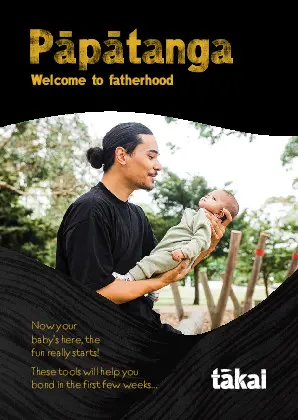
Now, Pāpātanga is a resource – Welcome to fatherhood, it’s a handy and practical resource for new dads. It includes some helpful tips on how to soothe pēpi as well. So, yeah, tirohia tērā o ngā rauemi.
Also, the Children’s Day activity cards. You know, children are our greatest treasure, and every day is Children’s Day, e te whānau. This printable version is a wonderful resource to take to whānau to help them with ideas and inspiration to get playing.
Little Matters website – Little Matters are the small, everyday codes, tikanga and habits that help keep tamariki safe and raise a future free from child sexual abuse. Rob, did you want to touch more on Little Matters?
Dr Rob Thomson:
Yeah, awesome. I’m so, so excited. You know, I’ve done a lot of work, and I’ve written papers on it, and I think the key is that it’s everybody’s responsibility to address family violence and child maltreatment and neglect. You know, we have a horrible record in Aotearoa – one of the worst in the world. And it will only change when we all take individual responsibility for doing something, you know? So, great resource. I think we all should be looking at it and thinking about how we can help.
Noel Woods:
Tēnā koe Rob. And of course, these resources are intended for whānau, and can support you in your mahi in the community.
Heoi anō kua tae mai te wāhanga whakamutunga. A huge mihi to all of you for coming along to this Tākai Kōrero webinar. Nei rā te mihi ki a koutou e aku rakatira hauora Raniera, Tamati, Rob – our three kaikōrero. Nei rā te mihi ki ō koutou kōrero, ki ō koutou whakaaro.
Remember, there’s lots more rauemi, articles, waiata, activities and more on the Tākai website. Tirohia ki te ipurangi tākai.nz.
Heoi anō, you fullas have an awesome day. Kia pai te rā. Tākai ki runga, Tākai Kōrero ki raro, Tākai Kōrero kia rere, kia tika. Whiti, whano nau mai te toki. Haumi e, hui e, tāiki e!
[Graphic: Tākai Kōrero logo]
Kaikōrero
Noel Woods, Mana Mokopuna
A passionate advocate for young people, Noel Woods collaborates closely with whānau, hapū, iwi and communities to unlock their potential. A pā boy raised at Waiwhetū Marae, he embodies te reo and tikanga Māori, and has a passion for the revitilisation of te reo Māori through music, video, stage performance and education. As Pou Whakahaere, Mata Māori at Mana Mokopuna, he champions Te Tiriti o Waitangi and mātauranga Māori. With a diverse background in teaching, youth work, music and event management, Noel thrives on community, kaupapa Māori, youth, and creative expression.
Raniera Rewiri, Little Matters
Raniera Rewiri is the founder and host of the Planting Seeds Podcast and involved with the Little Matters kaupapa. Since 2019, through powerful conversations on leadership, wellbeing, identity, and purpose, he has inspired thousands of people to embrace growth and live with intention. Raniera creates spaces through the podcast, wānanga, and community, for people open to doing the mahi alongside others. His message is simple yet powerful: the seeds we plant today shape the leaders, whānau, and communities of tomorrow.
Dr Rob Thomson, Brainwave Trust
Dr Rob Thomson is a Kaiako/Facilitator and researcher with Brainwave Trust, with extensive experience in child wellbeing, family violence prevention and supporting tamariki in care. His recent research and writing has focused on child maltreatment and adolescence, bringing a strong understanding of how early experiences, adversity and relationships can shape development and wellbeing. Rob brings a valuable combination of research, frontline and policy experience to conversations about adversity, resilience and how we can better support tamariki and rangatahi to thrive.
Tamati Ellison, The Blues
Tamati Ellison (Ngāi Tahu, Ngāti Mutunga, Ngāti Whakaue) is a father of six tamariki, and whānau and community are at the heart of his life. He is head coach of the Māori All Blacks and assistant coach with The Blues, and is widely respected for his understanding of team culture and his ability to connect with players and help them grow. Tamati brings a grounded perspective on balancing professional rugby with whānau life, and on creating environments where people can perform at their best.