Webinar: Kōrero tuku iho – what we pass down
This Tākai Kōrero webinar from 11 November 2026 discusses how culture and stories passed down through whānau support tamariki, with practical ways to help whānau shape their narrative and what they pass on.
Watch the webinar recording
: Tākai Kōrero: Kōrero tuku iho – what we pass down
Tākai Kōrero: Kōrero tuku iho – what we pass down (transcript)
Deb Rewiri:
Tēnā rā koutou katoa. I’d like to start first with a karakia.
Ko te aroha te pou. Poupoua kia mau, ko te aroha te pou. Tiritiria. Kia ū, kia mau, kia ū te pou o te aroha ki roto ki tēnei whānau, whakamaua. Kia tina! Haumi e! Hui e! Tāiki e!
Kia ora koutou katoa. Tēnā koutou ngā manukura e tiaki ana i ā tātou tamariki, mokopuna, e kīia nei te kōrero ko rātou ngā rangatira mō āpōpō. Nō reira, tēnā koutou. Ka tangi tonu te whatumanawa mā te hunga wairua, rātou kua whetūrangitia. Haere, haere, haere e moe. Ka hoki anō ki a tātou ngā tapuwae, tēnā koutou. Tēnā koutou, tēnā anō tātou katoa.
Ko wai au? Ko Whaea Deb taku ingoa. Kia ora, mōrena.
Welcome to this webinar this morning, looking at how we create moments, make memories and shape destinies. And first and foremost, we’re going to look at our tūpuna kōrero – those beautiful kōrero that has been passed down to us from our ancestors to us, their descendants. And so what I want to do first and foremost is to get our panel here.
[Graphic: Kaikōrero slide – Mele Tonga-Grant, Storyteller; Elizabeth Emere Harte, Tūpuna Parenting; Dr Alishia Rangiwhakawaitau Moeahu, He Ara Tupua Consultants]
There’s Elizabeth, Mele and Alishia, and they’re gonna introduce themselves. I’m going to give them a minute each to introduce themselves, and then we’ll get into the main body of the kōrero.
Kia ora, Elizabeth – Liz, could you start off first, please?
Elizabeth Emere Harte:
Mōrena e te iwi, ko wai au? I te taha o tōku tupuna tāne, a Walter Clapman Mountain, ko Rākaumangamanga te maunga, ko Ipipiri te moana, ko Te Rāwhiti te marae, ko Ngāti Kuta te hapū, ko Ngāpuhi te iwi. I te taha o tōku whaea tupuna, tupuna whaea a Emere Makere Waiwaha Kaa, ko Hikurangi te maunga, ko Waiapu te awa, ko Ngāti Porou te iwi. Ko Helen Mountain Harte tōku māmā. Ko Elizabeth Emere Harte ahau.
Ata mārie. Lovely to be here, thank you. Tākai, lovely to have you guys back! Really amazing, and so I’m glad to be here today to support this kōrero.
I lead a kaupapa called Tūpuna Parenting, and we share the gentle and respectful parenting ways of tūpuna Māori with whānau across the motu in many ways. And I’ll talk a little bit more about the whakapapa of that in a little while. But great to be here. Mōrena.
Deb Rewiri:
Mōrena, thank you. Kia ora, Mele, could we get you to introduce yourself, please?
Mele Tonga-Grant:
Kia ora, ko wai ahau? Nō ngā wai o Te Moana-nui-a-Kiwa ōku tūpuna. Ko Mele Tonga-Grant ahau.
My ancestors settled and made home in Tonga before my parents had migrated here to Aotearoa, making Te Awa Kairangi home, where I was nourished and whāngai by Taitā.
But in the context of today, and as many of us wear many hats, I’m a daughter that was raised by our community here, a sister that has walked beside many people, and a mother and an aunty who is a champion and an advocate for storytelling and continuing to stay connected to where our whānau have come from, and where we’d like to continue our story to go. So I’m a storyteller and an advocate, and I’m so excited to be here as part of the kōrero today.
Mālō.
Deb Rewiri:
Mālō.
Kia ora Alishia.
Dr Alishia Rangiwhakawaitau Moeahu:
Te toki tangatanga i te rā e, tē ngohengohe i te wai e. Ko Awanuiārangi te tupuna, ko Ngāti Awa te iwi tapu e.
Tēnā tātou. E hono anō te iti nei ki a Ngāi Tūhoe, Ngāti Tūwharetoa, Ngāti Rangitihi, Te Aitanga-a-Māhaki, Ngāti Porou, Ngāti Awa, Ngāti Mahuta.
Āe, tēnā koutou. Ko Alishia Moeahu tōku ingoa. Ko ahau tētahi o ngā he ringaringa, me kī, he ringaringa, he waewae mō te iwi o Te Āti Awa ki Te Whanganui-a-Tara. Arā, tēnā koutou.
So, my name’s Alishia Moeahu. I am, my husband is from here, from Waiwhetū, Te Āti Awa, and I think my role at the moment is supporting this iwi. I’m a kaikaranga, I’m a researcher, I do all sorts, actually. But mostly I tautoko – tautoko the iwi of Te Āti Awa. And also my own Ngāti Awa – chair of Ngāti Awa ki Te Whanganui-a-Tara. So he, āe ringaringa, he waewae mō, mō ngā iwi maha. Tēnā koutou.
Deb Rewiri:
Tēnā rā koutou anō. It’s both a pleasure and an honour to have you three here, to be able to share your mātauranga with everybody.
So, I want to contextualise this in a way like ngā hononga. You know, these relationships are the foundation for all of us when we come from an indigenous culture. And what I’d first and foremost like to ask is, each of you, if you can share a little bit about how stories have become part of the fabric of what you share in the work that you do – your narrative. And thinking about that you’re seeking it from your past, but also bringing it into the mahi that you currently do in a way that is simplified for whānau when you’re sharing that narrative.
So, if you could start first, Mele, that would be great.
Mele Tonga-Grant:
Mālō Deb, thank you for the question.
For me, because I am first generation, born and raised here in Aotearoa, and so it was extremely important for my father that we stayed connected in some way to Tonga. That was mostly done through song and dance, through the arts where we would come together as a community, and that’s where we would learn about stories of where we come from, through performing arts or through toi. One of the things I didn’t understand as a child was actually that that’s what was happening – that I was learning our histories and those stories that would later become important to me to be able to share with my children.
But in my mahi, what I have found is actually like pausing in the now and having those kōrero with young people, as well as young parents, about – it doesn’t matter whether you know those stories or not. There are lots of stories that were lost, and we weren’t told growing up. But then actually starting to decide as a parent now, actually, I can change that. I can change the stories that my children grow up with. I can start to feed them parts of who we are, so that they can strengthen who they want to become.
So a lot of the time it’s like, okay, so who are we today? Who are you connected to? Or how far back can you go? And if you don’t know, who are some of the people in your community that you can start to ask questions of? And that no question is a dumb question – being able to say, okay, so who’s this, and why did we end up here? Cos it’s always important to understand first how you ended up where you are now, in order to be able to decide, okay, well then what future pathways do I wanna take, and what do I want my mokopuna then to be able to inherit?
Deb Rewiri:
Kia ora, thank you, Mele. And in that way, what you’re doing is bringing the past, present and future. So the narrative, or the storytelling, is how do you create that in a moment? So thank you for that, Mele.
Liz, would you like to share?
Elizabeth Emere Harte:
I guess with our kaupapa we encourage a lot of the professionals, the kaimahi who support whānau Māori that we deal with, to bring forward their stories and their whānau pūrākau, their whānau oral histories of their whānau, to share with the whānau they support.
We often ask so many of these whānau to be in these social worker or health professional or whatever the role might be kinda situations, to be really vulnerable with us and to share so much of their lives. That they’re having that reciprocal nature is perhaps an important element for whanaungatanga, for rapport, for building that trusted relationship with whānau. But also our stories hold lessons, nē, and hold, as Mele was saying, and hold lots of things that we can choose and be intentional about. And really, becoming a parent for me was really that turning point in wanting to know more about how did our whānau do things? And particularly with knowing Mum as a lead researcher in this space before, yeah, which we started this mahi together.
But it wasn’t until I had my mātāmua that I was like, “Well, Mum, this is really hard. Kōrero mai. Tell me a bit more about your mahi, nē? How did our whānau do it? How did we used to do it?”
You know and then getting kind of those kōrero and that advice then. I guess any stories that get shared with you then kinda become pūrākau and lessons that you can carry on, even if you don’t think about it. And little things that your whānau would do with you can influence and inspire, or be lessons on what not to do, on your own parenting journey.
Deb Rewiri:
Kia ora, thank you for that, Liz. And I think one of the key points you made was that building rapport and asking whānau to share their narrative, which may open some vulnerability, but actually that there is some value in what they share, and the ability for each and every one of us to actually create a presence around them when they’re sharing, so it’s done in a respectful and honouring way.
So everything is not light and easy, but actually, at some of the hard times through their lives, there’s obviously lessons that whānau can learn through that process, where they’re reflecting on what they’re speaking through in terms of their own truth. Kia ora, thank you for that.
I’m going to throw it open to you now, Alishia, and thinking about, you know that pūrākau, that real historical underpinning that we have in the pūrākau that have surrounded us within Aotearoa. And I know Mele’s talking about some of that pūrākau that she brings from Tonga, and how we work with that in a way that makes it more meaningful for whānau. Kia ora.
Dr Alishia Rangiwhakawaitau Moeahu:
Āe, ka tika.
I think I’m gonna start from the source of my foundations in terms of pūrākau. So I’m gonna step back in time, and I’m going to talk about my kuia. So I was raised by my kuia. She was of Ngāi Tūhoe descent.
Now, she was my first teacher, and she nurtured me in te reo and taha wairua with kindness and aroha. And always, always I sat beside her, we had that, you know, through everyday closeness, listening to ancient karakia, whakapapa, kōrero tuku iho, pūrākau.
So I’m gonna start from there as being my source, you know. And through these stories they grounded – they were grounded in our kōrero about the taiao back home, about our maunga, our awa and our hapū. And through, you know there was humour and emotion. Some of these stories made me laugh, they were joyful, they were frightening, they were awe-inspiring. They stirred emotions and encouraged curiosity.
So from those, I guess those whāinga and those wāriu, I guess that kind of stirred something in myself to become a kaiako. So everything I learned through that closeness with my kuia, I guess I depicted that in my teaching. All those foundations that you know, I think as a child, I was very fortunate to sit with my kuia, and it was part of my wellbeing and my hauora.
And I learned about that at a very young age. And like I said, te reo Māori was my first language. So I was very fortunate that I had my kuia. She was my kōhanga reo, she was my kaiako tuatahi. She was my everything. So I think for me, it’s going back to the source of my pū-rākau, you know, it’s really important.
So she would break things down for me – the kōrero – so I would understand as a mokopuna. She would break it down, knowing that one day, when I’m older, I would find I guess the deeper meaning in these pūrākau. She sat with me and spent that time. She dedicated her time and her energy and her aroha to doing that.
And everything that I’ve learned from her, I guess I implement that in everything I do now as a kaiako, as a practitioner of karanga, you know. I bring all those pūrākau into my practice, and I help others as well. So āe, I just wanted to start there with pūrākau.
Deb Rewiri:
Thank you for that, Alishia. I also I think as you were speaking, I looked at that whole concept of create moments, make memories, shape destinies. And learning at the foot of our ancestors, or our aunts, our uncles, our grandparents. And thinking about, how does that shape the destiny, or the track that I’m on?
And to put those questions actually in a practical way, how is it that you can work more collaboratively with whānau so that they can source their own memories and their own pū-rākau from where they’ve come from, you know, and those protective factors that were in place? Because it’s like a set of scales. We have risk factors, and we have protective factors.
What I’m going to ask you to do is – sometimes people come up with the risk factors first, but how do we create a process whereby whānau can focus on the protective factors that were around them at that period of time, and getting them to think more proactively about that?
So I wanna come back to you, Mele, and thinking about – you work specifically with rangatahi – and thinking about some of the kōrero that you have with them that actually allows them to open up and source some of that protective factor, protective factors that are available to them. Kia ora.
Mele Tonga-Grant:
Awesome, thank you for the question. One of the places I like to start with our young people is with them as the starting point of that story. Who are you? Who do you know yourself to be? What are the things that you inherently have? What are the skills that you have inherited from people? Because they came from somewhere. Those giftings that you are able to share with people and that you’re naturally good at – those are part of your DNA. That’s part of things that have been passed on through generations.
So that being a starting point to then say, okay, cool, who else was good at that in your family? What parts of that would you like to hand over or pass on to your, your tamariki, so that they are also able to inherit some of those things that you’ve given or been given?
For Tongan, we have a motto that is “Ko e ʻOtua mo Tonga ko hoku Tofiʻa”, which Mate Maʻa Tonga, you know, they take all over the world, which it means “Tonga and God are my inheritance”, but actually starting to flesh that out more, like, okay, what else? Our children, our next generation – what else are they inheriting from us?
And so that, for me, is a really good starting point to then start to say, okay, well then, here are some questions that you might wanna ask your whānau about. What was Uncle So-and-so like? What were the things that your whānau naturally did back in the islands? And what are the reasons why you might not do that anymore?
There were some stories about growing up, wondering why we were always spending our weekends, our holidays, making tapa. And it was, for me as a child, looking at other people go on holidays and play games and you know go out and enjoy their school holidays, and I’m inside learning how to weave, learning how to do this. And actually finding out that was part of the craft, or what was handed to them from their grandmother, their great-grandmother, and actually, within that, the stories that were held within each picture that was drawn.
And so being able to sit down and be like, cool, I’m digesting this what else? And having that hunger for starting to understand why I’m the way I am, and being able to pass it on to my children as well, and being like, “Oh, you’re like that because you’re like your uncle.” And keeping those stories and memories alive through actions and things that we do, and celebrating that, rather than being like, “Oh my gosh, you’re such a hōhā.” But all of those things that make us quirky and a little bit different are actually things that – you were made that way for a purpose. And really looking at it from a strength-based place as well. Yeah.
Deb Rewiri:
I love that. And I like that you emphasise it’s looking at it from a strength-based process, because we know that a lot of our young ones are very much adept at social media, and you know have access to a whole lot of information that we probably – well, I certainly didn’t have available to me at that time.
So the importance of coming back into that relationship process whereby we sit and we talk, and we’re doing something, for want of a better term, collaboratively – whether making tapa cloth, whether weaving, whatever it is that we’re doing. You know, it’s something that we’re creating together, and what we’re doing in that moment is sharing the stories of gathering in those relationships that we’ve formed with other people, you know, like our aunts, our uncles, our grandparents.
Is there anything you’d like to share about that, Liz?
Elizabeth Emere Harte:
Kia ora. Āe. When we... we have a whānau wānanga kaupapa that the kaimahi we work with can deliver to the whānau in their communities. And one of the activities we have in there is a reflective one – it’s kind of asking them to look back, to look back, and they don’t have to share it out loud, but to think about their own upbringing, and things that they liked or things that they didn’t like in their whānau situation and parenting. And they can write these down, and there’s a sheet, and they can do two columns, or sometimes we’ll do post-its, and they can put the post-its up.
But the second half of the activity is, ka pai, you’re parents now with your own tamariki. Which of these things are you gonna bring into your parenting journey? Which of these things do you want to do for your whānau? And which of these things do you want – the “don’t like” side – do you want to do the opposite? What do you want to change about those to bring into your journey? We even went so far as to make it into a little kākahu activity sheet.
You know, you have to make these things interesting and interactive for whānau, so then they can... And some of them are quite creative. I’ve coloured in this as an example, but some of them are very decorative. But on each of these feathers, we asked them to write the thing that they’re gonna bring forward. You know, and so these are some real examples from whānau, but it’s: finding one-to-one time with each tamaiti, going to sports, encourage gentle honesty, coming to the marae with whānau, being a present parent, lots of aroha and cuddles, books at bedtime, teaching about te ao, playing sports with me.
But that activity aligns really perfectly with what Mele was saying in terms of the kōrero you’re having with rangatahi, and in our case, these kōrero are with the whānau. And you could have these kōrero in a one-to-one hui, or in this wānanga setting with an activity which supports whānau, because then it’s a little more anonymised, nē? Particularly if it’s post-its up on the wall and they don’t have to show their little kākahu activity sheet to anyone, that can just be for them.
But it gets them to really be intentional and look forward, and consider the kind of parent that they wanna be for their tamariki and their whānau, and the kind of things they might need to change. It’s almost an intention-setting activity, nē.
Deb Rewiri:
Yeah.
Elizabeth Emere Harte:
Do it early in the wānanga.
Deb Rewiri:
And what I like about it is you’re getting them to become really reflective, on their own practice. I remember Professor Amster Reedy said it’s not how far back you go, it’s how far forward you can bring it.
And so those pūrākau that you’re drawing – in a very simple way, it’s a very practical activity where they can see it and bring it forward, and then they can choose to make... do something different. You know, if it’s been a protective factor, of course bring it forward. If it’s been a risk factor, well, actually, how do we change that so that the dialogue becomes different, or the narrative becomes different, as we move it forward?
Dr Alishia, and anything you want to premise off the previous two and how they’ve spoken about it, in bringing this kōrero and framing it around a simple way where people can become more reflective and more intentional in what it is that they do, as they become more consciously aware of their own practices as a parent. Kia ora.
Dr Alishia Rangiwhakawaitau Moeahu:
I think, and, and, tēnā kōrua, ngā wēnā, ngā whakaaro e puta ana, e tautoko ana. Just wanna say, you know, when we talk about pūrākau and reawakening pūrākau, I think it begins with relationships, the sense of belonging and the stories that whānau already carry.
People need to feel welcome to learn, you know a lot of these pūrākau, especially ngā mātua our parents. So whatever knowledge, you know, they have in te reo, whakapapa, ā-marae, ā-iwi, we need to encourage a safe and inviting environment.
You know, begin, you can begin with familiar memories in terms of stories – you know, who raised you, what places, what feels like home? What sayings, ngā waiata, ngā pūrākau, stories do they... what stories do they remember? You know, he whakaahua, a photograph, a nickname, a recipe, a memory of a kuia, of a koroua, aunty and uncle, you know, rātou ko Mene pea. And it’s open for a pathway to whakapapa, nē.
And we need to create these welcoming spaces for kōrero. So you know, like gather kai, what places, you know share photographs and invite storytelling without putting anyone on the spot, because we don’t want to do that. We don’t want to discourage people. It has to be an inviting space, and make room for listening, you know, uncertainty and different experiences of belonging. Reconnect. Reconnect through trusted people – you have to have, when you’re dealing with stories, you have to share these stories with people you trust, nē. With whānau in agreement with sharing their stories, approach relatives, kaumātua, this is if you’re seeking deeper pūrākau in your hapū, in the environment that you live in, and you need to look for some of those pūrākau when you’re researching those pūrākau, make sure that you’ve got those ngā ture in place before you approach these kaumātua, these aunties, these uncles, marae representatives, iwi. Let relationships guide the learning and help confirm your connections when you’re learning about some of the stories. It’s really important – he mea matua tērā. And return to places together, together, nē, like with your whānau, when you’re learning about these pūrākau, when you want to share them with your tamariki, your children. Whānau are supported, you know, like a marae visit, tō awa, tō maunga, your ancestral – he aha? – wāhi tapu, you know, tō ūkaipō, me kī, tō matemateāone, me kī. You know, arrange visits with the appropriate people, so whānau feel expected and supported.
Grow your pepeha. Grow your pepeha from confirmed connections. Explain relationships and responsibilities carried within each of the lines. Whānau can begin by introducing themselves through their pepeha. That’s where the stories can begin, you know, and through your pepeha he pūrākau kei reira, me kī – it can flourish from there, your pepeha, nē.
And bring stories into everyday life. And I’m just talking from my experiences. My kuia always, you know, she always used pūrākau as an example, he tauira, for when we cook, for everything, everyday life activities, you know, ki te ngā māra kai. She’s bring tāne into it. So yeah, look at those experiences that you can grow your stories through. And I’m just speaking on a te ao Māori perspective, me kī, so and I’m mindful that not everyone may understand where I’m coming from. So I’m just trying to break it down as best as I can. So I’m not going too hōhonu. I’m just giving some examples of how I think pūrākau can be awakened, can be received, can be learnt, nē?
Deb Rewiri:
Yeah kia ora Whaea. Cos I think what we’re doing is creating an inquiry, so that it doesn’t matter what your cultural background is. I always believe te ao Māori is accessible for anybody, whatever your cultural background – tangata Tiriti. You know, for me, it opens up a window of understanding, and of humanity broadly. And so those processes, I think, are practices premised off promotion and protection of that past, and of that present, and of the future. You know, we’re surrounded by it all the time.
So kia ora tātou for the sharing of your pū-rākau, because it certainly, it gives me an opportunity to share some of that process – that we’re coming at it from a personal angle, but we’re also wanting to seek relationship with somebody where we’re bringing some – a toolkit in to support the whānau in a way where they can actually source their own knowledge from where, wherever they’re sitting. And so that has a factor that is ongoing for them.
I was thinking about a kaumātua I met down in Ūawa, and he was sharing with me how, if there was any negativity or anger – he shared this pūrākau around oxytocin, which is the in-love hormone. And he said to me, “Oh, you know, girl, I don’t know what that means.” But he said, “You know, when we worked in the māra kai,” he said, “if we had any, anger” and our people could pick it up readily. We can understand as human beings, when we’re next to somebody, we can sense them or feel them. It’s some of that intuitive knowing that we have. And he said, and if anyone came into the māra kai – he said actually they weren’t allowed into the māra kai, because he said it was that transference of that energy that would affect the plants, would affect the māra. And he said, so they were told to go down to the wai, to the water, to cleanse themselves, to have a karakia, and when they’d restored themselves, to come back, you know to join us yet again. And when I was talking about oxytocin and how the pēpi, the baby, actually needs that loving around them. And he said, “So obviously, we wouldn’t allow anybody who was carrying that energy to handle the baby.”
So for me, it was in that practical sense that he was saying anything to do with te taiao actually had a direct relationship, and that was personified really from te taiao out into the personal relationship. So he said, “Yeah, yeah, your oxytocin sounds great, Deb, but actually,” he said, “we already have a tikanga that takes care of it.”
So I want to come back to you too, Mele, and thinking about – you know – because sometimes we can come across whānau who are carrying heavy challenges with them, and, you know, especially with rangatahi, if they’re growing up in an environment where they don’t have processes to be able to cleanse themselves.
So, Mele, I’d like to ask you what it is that you think you can do in that process, or, you know, to help rangatahi become more, aware of their own emerging self-reflection.
Mele Tonga-Grant:
Thank you for the question. I was just thinking, while Dr Alishia was sharing about being connected to pūrākau, or finding accessible ways to be able to find that connection, and actually just starting to think about my children and having conversations with their great-grandfather about some of that disconnect. And actually the importance of sharing with them the kōrero that he shared with me about why he didn’t, you know, didn’t pass on te reo Māori to his tamariki, therefore their dad. And then why it was important for us that they were in Māori medium, and also being able to grow up speaking Tongan and Māori. And actually being okay to acknowledge some of the mamae, or some of the things that have been conflicting to what we currently do and how we practise.
And so my tamariki would ask, “Oh, why is it that when we’re with your whānau, they all talk to us in Tongan, and now Papa’s family has to they’d kōrero Pākehā to us, but now they have to learn Māori to be able to talk to us.” Because they could only speak Tongan and Māori growing up. They went through kōhanga reo at Waiwhetū, and now Te Ara Whānui.
But part of that was sharing, actually, I want to protect that culture – that our languages and the things that had been... could be easily lost if we didn’t take the time to share that with them. And so I shared with them that, for me growing up, I didn’t get a lot of the traditional Tongan pūrākau. We were told Bible stories. We were told about things that our parents and grandparents did back in the islands, but there were heaps of stories that weren’t passed on to us.
And so for me, my entry point was learning about the pūrākau here in Aotearoa – all the myths and legends, “myths and legends”, the stories of our ancestors, and particularly of Te Awa Kairangi. Being able to share that with them, and then say, okay, we know that your dad is from Taranaki, and he hasn’t been there before. We’ll just visit the maunga first, then the awa, and then we’ll start to gradually make that connection. And then following their grandad, their great-grandfather when he was going up to a tangi, and saying, “Oh, we’ll come with you” – just offering to go. So then that meant, as a whānau, we all got to experience the first time at the marae, the first time in their awa, the first time on their maunga. And being like, it’s something that we’re experiencing together, and whilst we didn’t have it to pass it on, now you’ve got it, and you get to ask more questions of everyone at the marae about who it is that you come from and where it is that you whakapapa to.
So, yeah, I think just starting in your surrounding area and who you know – and as Dr Alishia was saying, those trusted people to be able to walk you through that process of connecting to those stories as well. And actually, it’s okay to just turn around and say, “Oh, well, actually, this is what I know, and here are some photos from when you were a baby as well,” and starting to tell those stories to them. So my kids are five to nine now, and showing them photos of them as babies, and the places that we took them, the things that we did together, and being able to unpack – oh, why did I take this photo? I took it because it was important to me because of this, or you look really cute, or you did a silly thing.
And starting to bring some of the digital storytelling into it, because they’re digital natives. And so being able to use that medium to tell their stories, so that they’re comfortable to be in the oral space of passing on stories, but also be able to... and explaining and articulating themselves. But also to be able to use the medium through digital, whether they’re taking videos or vlogging or TikTok dancing, whatever that looks like, being able to do that.
Deb Rewiri:
So it’s making it relative to the rangatahi who are there. Thank you, Mele, that was really informative. And also I’m thinking about, again thinking about some of the resources that we can utilise on the spot inside the whānau, in their whare, you know, that they may have with them automatically so that we’re highlighting what they’ve got available that they may not have accessible to them – a computer, or they may not – because some of the news that came over the radio this morning was that some of the rangatahi cannot actually get online, because in their home they don’t have access to a computer.
So looking at the resources in a practical way – what they already have in their home environment. And also, when we complete this, Tākai has some resources that can actually be taken into the home. And Liz gave a great example, you all have, of what you can utilise in the moment to actually help them practically utilise what they have in their own whare.
Is there anything you want to talk any more about that, Liz, in terms of practical application?
Elizabeth Emere Harte:
When we’re talking with parents and whānau, it kinda relates back to that activity as well, and asking them to… Because what our kaupapa primarily does is share mātauranga around the pre-colonial parenting practices of our tūpuna, and talking about the tapu and the mana of pēpi that they’re born with and that they hold, and that our tūpuna were really understanding and would respect their tamariki, respect their voices, respect their actions. And there’s wonderful whakataukī and things to inspire and support, and also as evidence, nē, of these parenting ways. And then when we sometimes... and I take Dr Alishia’s point of having to always tread carefully. The whanaungatanga and the rapport is so important, because then you kinda know the right kind of questions to ask.
And particularly if whānau have had a difficult upbringing themselves and want to do differently for their whānau – pai tērā – but it means that you then have to be really careful about how you ask about their pūrākau, or whether they have anyone in their whānau and whakapapa that they can speak to, to draw on pūrākau and learn from stories and lessons. And sometimes we get those whānau who say, “I haven’t got any stories. There’s nothing good.” You know, they go there, or they go saying... perhaps they’ve even distanced themselves from their whānau for various reasons, and they’re like, “I don’t talk to them. We’ve moved away on purpose.” Da-da-da-da-da. There’s a whole other whakaaro then to pick up and try and draw on.
One kōrero we talk about often is building your own kāinga, building your own village. Kei te pai tērā – our tūpuna lived in kāinga, and pēpi and tamariki were the shared responsibility of everyone in that kāinga. Often it was whānau – not only whānau, but often it was. But in your situation, let’s talk about who can be in your kāinga. Who can support you? Who are your friends, your neighbours? Are there parents at kōhanga or kura or wherever that you can... are there playgroups you can go to? Maybe your tamariki aren’t in kōhanga or daycare or whatever. That’s a community you can draw on, that if you join, ta-da-da-da-da, and you can wānanga with them.
And this will depend on your skills, the rohe you’re in, who this whānau is, and you can tailor that kōrero. But you will never talk about a support system – you will always talk about building a kāinga and finding that whānau support. And then the other whakaaro, perhaps, to draw on in that space, particularly if they’re distanced, or even if they’re disconnected. If they’re disconnected and they’re not ready yet to go on that ao Māori journey... It could be that you have a kōrero with them, yes, about this mātauranga and how our tūpuna would raise them, raise their pēpi and tamariki. And you can let them know that across the motu, all of our tūpuna effectively did the same thing. So even if we can’t track through your whakapapa line to a specific tūpuna who did these things, or did these ways, or through your own whānau, had beautiful parenting practices that you want to draw on and apply to your journey, you can be inspired by this mātauranga tūpuna – the tiaki o ngā tūpuna of our tamariki sorry – and you can be inspired by that, and you can bring that into your own whānau, into your whānau tikanga, your whānau ways of working, nē.
Deb Rewiri:
So changing the narrative – changing the narrative that may have been a risk factor into a protective factor.
We have two questions in, on the Q&A. How can we use taonga to open a kōrero with whānau? How do we use taonga, and what taonga would you use?
Elizabeth Emere Harte:
There are lots of ways to answer that. I will pick one, as I wear a physical taonga around my neck. And if someone was to ask me about this and – “Where did you get it from?” – I’d say, “Oh, this was Mum’s.” And then it gives an opportunity to open a kōrero and share about when I got it. And unfortunately, it was because she passed, and so I inherited it, but it gives me an opportunity to talk about her.
And so whānau will have special things, whether it’s things they’re wearing, or if you’re doing a home visit, there might be an artwork on the wall, there might be something sitting on the shelf. “Oh that’s really beautiful. Can you tell... Where’d you get that? Can you tell me about it?” And it just opens an opportunity for a kōrero.
But that’s a very in-your-face version. I think, Dr Alishia, you referred to a whole range of these, that in the more wairua sense. But, yeah, do you think that’s what they’re going for?
Deb Rewiri:
I think so, but I think it’s like recognising that, because they may not ask the question, you know, “Where did you get that from?” or “Tell me the story about it.” Yeah, so how is it, you know – I think you created a process by looking at what they have, and what does that taonga mean to them? Because then you’re personalising it to actually their environment, rather than bringing your environment into there. Yeah.
So, another question that they had – and I’ll pass it on to... kia ora, Liz, thank you for answering that. What are some of the tikanga in your whānau that you hope your children pass down?
What I quoted from Matua Amster Reedy, you know – how far forward do you bring it? So thinking about, the you know, what is it we want to bring forward, and what we wanna, you know... to imagine what our children will pass down. So what we’re asking them is, if the mokopuna look back, what is something that they will be able to share about you? Because in that way, it personalises it, but it actually brings it back to them too, to reflect on that. So, Dr Alishia.
Dr Alishia Rangiwhakawaitau Moeahu:
Oh kia ora, kia ora rā. I wanted to reply to the first question as well, about the taonga. A taonga can be a physical and a metaphysical form, nē?
So what I would do, you know, these other forms of taonga – you can start with a ruruku, a karakia, karanga, ngeri, ōriori, you know. I’m thinking of the... the metaphysical, nē? Not so much the physical. Cos taonga can mean both, nē, I just touch upon that, and of course the physical taonga, nē. And sorry, what was the second question again?
Deb Rewiri:
I’ve forgotten it already.
[Laughs]
What we, when our mokopuna look back... I was listening intently to... When our mokopuna look back, you know, what is it we want them to remember about us? When our mokopuna’s mokopuna look back, what is it? Because by then, we’ll be an ancestor. So what is it, our tūpuna? What is it we want them to think about us?
Dr Alishia Rangiwhakawaitau Moeahu:
You know, I think for me, when I... when I remember my kuia – I’m speaking as a mokopuna nē? – I would have all these... when I described her as aroha. So just that feeling of aroha, manaakitanga, a great storyteller, in terms of that, you know.
Also, I think what she did is she strengthened my identity and belonging, gave me that sense of belonging, you know, by telling the stories of our whenua – you know, our awa, Rangitāiki, our maunga, Pūtauaki, all our hapū. Every name on the bend – like, you know, like Tainui: he piko, he taniwha, he piko, he taniwha.
So on every bend, she knew all the names. So she strengthened my identity and gave me that sense of belonging. And she sustained... she embedded that mātauranga Māori in me. And when I say mātauranga Māori, that’s that indigenous knowledge that we know – every iwi, every hapū have their own mātauranga, or Mātauraura; they have their own indigenous knowledge. So she would... looking back, she was the one who taught me all of these things, you know – mātauranga Māori.
Encouraged me to be curious, to be a deeper thinker, to be confident in my stand as a you know, someone who would express their cultural expression through everyday activities. And she nurtured my wellbeing. So I would say she was a nurturer of well... my wellbeing, my hauora.
So, you know, learning happens through our relationship – you know the aroha, the care, the trust. You know, the stories they nourish my intellect... intellectually, emotionally, culturally and spiritually, he aha, wellbeing. And also she was, you know, she showed me how teaching can respond to the learner. And when I say that, I mean she was able to break down the learning to suit my, I guess, my reanga. You know, she was able to do that, to break everything down so I could understand it. And when I got older, she’d keep on feeding me, you know, knowing that I was able to... now I can give her a little bit more, and I can give a little bit more, cos she’s at that age, kind of thing. So she was able to do that, and a wonderful teacher. That’s a great teacher.
So I followed in her footsteps, you know. I became a kaiako, where I could be able to I guess create my, I guess experiences through her learning, and be able to share that – what I learnt from my upbringing. So that’s what I would say. And I share that with my mokopuna and my children.
I share those stories because I am passionate and they do remember, and yeah. Ngā mihi, kia ora.
Deb Rewiri:
Ngā mihi.
There’s a lot within what each of you have shared. And if I come back to that quote that I made this morning – create moments, make memories, shape destinies – each of you have spoken about how, in some way, your destinies have been shaped by those early experiences that you had, and from the people who surrounded you. And having those protective qualities actually helps to guide us into a space of where we come to as sharing and shaping our lives and the people who come after us. And so I wanna thank each and every one of you for sharing this beautiful mātauranga.
What we’re going to do is look at the rauemi that you can actually use in a practical way to take with you into the whānau that you’re working with currently.
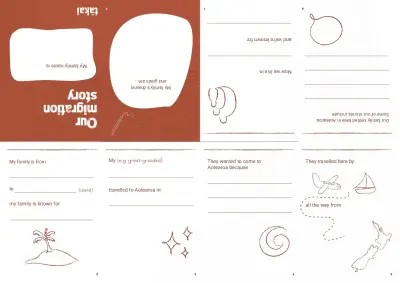
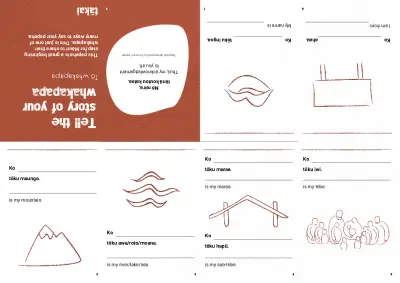
[Graphic: Tākai My whakapapa storybook, takai.nz/publications(external link); Tūpuna Parenting, tupunaparenting.maori.nz(external link); Tākai Our migration storybook, takai.nz/publications(external link).]
These are the rauemi that are available through Tākai, and that you can access in a way that you can work with whānau with the practicalities, and to make it more reflective and more specific around the protective qualities of whakapapa.
And so, as I said, each and every one of the whaea that have spoken this morning – from their own experiences, what they’ve shared have certainly encapsulated the importance of reaching back into the past, bringing it into the present, and helping to shape the future.
Kia ora tātou.
Dr Alishia Rangiwhakawaitau Moeahu:
Tēnā koe Deb. Ngā mihi. Ngā mihi ki a koutou.
Elizabeth Emere Harte:
Mā te wā.
[Graphic: Tākai Kōrero logo]
Kaikōrero
Deb Rewiri, Brainwave Trust Aotearoa
Deb is passionate about connecting neuroscience and tūpuna parenting. As a Brainwave Trust kaiako she travels across the motu working with whānau and whānau supporters. She has long been involved with the early childhood sector, specifically understanding how early trauma impacts neural pathways that can create long term implications for an individual’s ability to thrive. Deb has two adult children, four whāngai and four mokopuna.
Mele Tonga-Grant, Storyteller
Mele Tonga‑Grant is a New Zealand-born Tongan writer, poet, and community leader whose debut collection Tui Pea Luva (2024) is a lyrical tribute to female resilience and intergenerational wisdom. Drawing on her Tongan heritage and upbringing in Lower Hutt, her poetry weaves together voices of mothers, sisters, and aunties, celebrating Pasifika identity and cultural continuity. She also brings Tongan stories to life through translation and community engagement.
Elizabeth Emere Harte, Tūpuna Parenting
Inspired by her mother’s and grandmother’s work, Elizabeth is applying her years of experience in user experience, designing for customers and strategy planning to this kaupapa. Her very technical background was as a software developer (BSc(Hons)) and Roboticist (MEngSc) before moving into leadership and planning roles. She learned about tūpuna parenting ways in detail from her Mum, Helen, in the years before she passed away. Elizabeth is also māmā to three young tamariki, who are inquisitive, cheeky and mischievous, just like Māui was, and she wouldn’t have it any other way.
Dr Alishia Rangiwhakawaitau Moeahu, He Ara Tupua Consultants
Alishia is a tikanga expert working across education, government and community development and has a background in early childhood education. Alishia uses Māori leadership philosophies to guide her mahi, which focuses on building cultural competency, applying Mātauranga Māori and upholding Te Āti Awa tikanga through culturally grounded guidance, across educational, community and organisational settings.
Helpful resources for whānau